Bitcoin halving countdown
Blocks at 5th halving
1.05M
Average time between blocks
9.82 m
Current block
0
Missing blocks until halving
1,050,000
What is the Bitcoin halving?
The Bitcoin halving occurs approximately every four years and reduces the mining reward by 50 percent. This mechanism systematically slows new supply entering the market and reinforces Bitcoin's scarcity.
Historically, halvings have marked key transitions in Bitcoin's market cycles. They influence miner economics, supply dynamics, liquidity conditions, and long-term valuation frameworks. As issuance declines, market participants reassess cost bases, capital flows, and structural positioning across spot and derivatives markets.
The halving is not simply a technical milestone. It is a defining feature of Bitcoin's monetary architecture and a core reason it continues to be viewed as a digitally native hard asset.

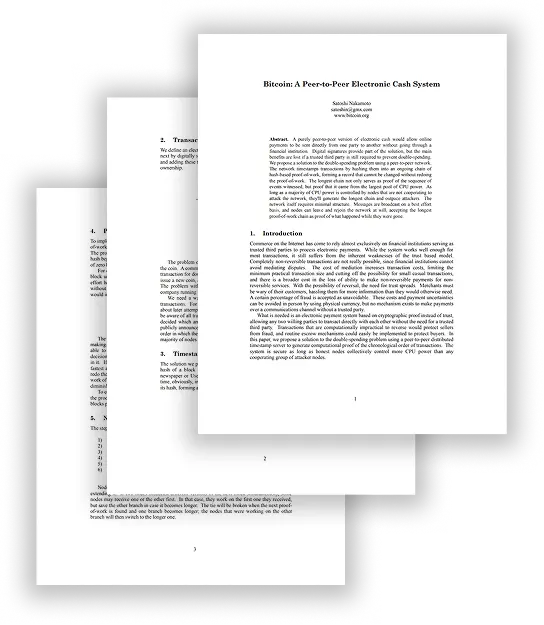
The Bitcoin Whitepaper:
The Origin of the Halving
On October 31, 2008, Satoshi Nakamoto published “Bitcoin: A Peer-to-Peer Electronic Cash System.”
The nine-page paper introduced a decentralised monetary system built on cryptographic proof rather than trust, laying the foundation for a new era of digital finance.
The The Bitcoin halving mechanism, embedded in the original protocol, is central to that design. By reducing block rewards every 210,000 blocks, Bitcoin enforces a predictable, disinflationary issuance schedule capped at 21 million coins by approximately 2140.
 The Original Bitcoin Exchange.
Since 2012, Bitfinex has operated as one of the earliest marketplaces for Bitcoin.
As one of the longest-standing Bitcoin exchanges, we have witnessed every halving cycle, every major structural shift in Bitcoin, and pioneered the growth of institutional-grade digital asset markets.
From early Bitcoin spot markets to advanced derivatives, deep liquidity pools, and professional trading infrastructure, Bitfinex has grown alongside Bitcoin itself. Our commitment remains the same: providing sophisticated market participants with secure, resilient, and high-performance access to the Bitcoin economy. Explore our history and discover how Bitfinex has helped shape the evolution of global Bitcoin markets.
Bitcoin Halving Insights
Explore our dedicated educational series examining previous halving cycles, supply dynamics, miner behaviour, and macro implications. Discover how halvings have historically influenced volatility, liquidity, and long-term trend formation.